
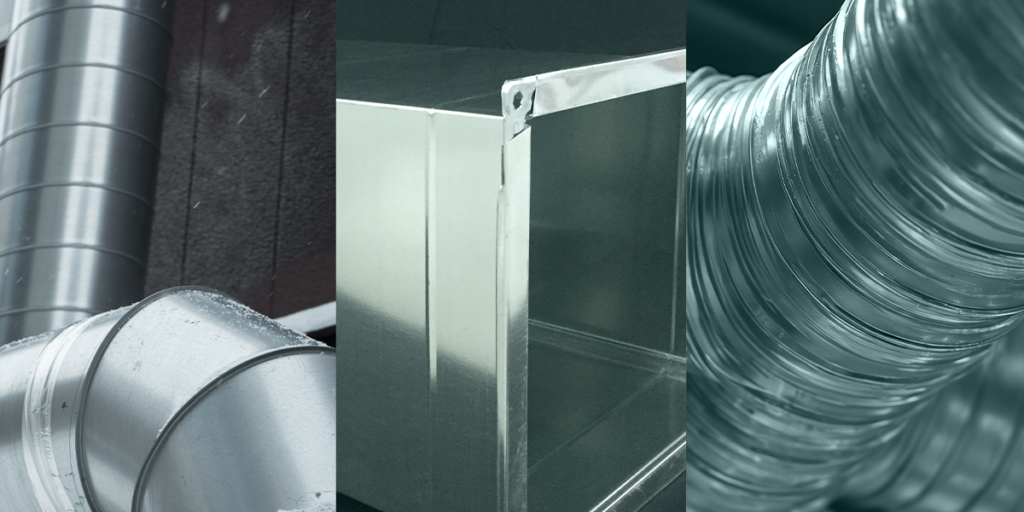
Spiral Duct vs. Rectangular Duct vs. Flexible Duct: Performance, Cost and Best Use Cases
Commercial HVAC contractors, estimators, design-build teams and other professionals often need to choose among spiral, rectangular and flexible ducts. Each has distinct advantages depending on the application. This guide breaks down the performance, cost and use case differences to help you choose the best ductwork for your project.
Choosing Ductwork Based on Project Needs
Selecting the best ductwork for commercial HVAC systems depends on your specific project requirements.
- For exposed ceilings and aesthetic appeal: Choose spiral duct for its clean, industrial look. The round profile and visible seams are popular in restaurants, breweries and modern office spaces.
- For tight ceiling cavities and trunk-and-branch layouts: Opt for rectangular duct. The flat profile fits into shallow cavities and runs flush against structural beams, where spiral duct cannot.
- For short connections in tight, awkward spaces: Choose flexible duct, but limit its use to short runs, as it is not suitable for primary duct runs.
- For the lowest air leakage and highest efficiency: Select spiral duct. Its construction typically results in tighter seals and fewer connection points compared to rectangular systems.
- For the lowest initial material cost: Pick rectangular duct, as it is usually cheaper per foot. Keep in mind that the total installed cost is influenced by labor, fittings and sealing requirements as well.
Performance Comparison: Airflow, Leakage and Noise
Performance differences between duct types affect energy consumption, comfort and system longevity.
Airflow Efficiency
Spiral duct’s round shape and smooth interior minimize friction and static pressure drop compared to rectangular duct, where corners disrupt airflow and increase resistance. The spiral shape allows for smaller, less expensive fans and lower energy consumption over the system’s lifespan.
The flexible duct’s ribbed interior creates higher friction and a greater pressure drop, making it suitable only for short final connections. For long duct runs or high-velocity applications, spiral ductwork offers the most advantages.
Air Leakage and Energy Loss
Poorly sealed systems can waste 20%-30% of airflow through gaps and faulty connections. Spiral duct offers leakage rates of less than 1% of the total system cubic feet per minute (CFM), while rectangular systems often exceed 5%.
Comparing spiral duct leakage versus rectangular duct leakage comes down to the number of connections and the sealing methods required. Rectangular duct requires more field joints, corners and manual sealing, increasing the risk of air leakage. Flexible duct can also leak at connection points, and improper installation or compression can amplify these losses.
Acoustic Performance and Noise
Rectangular duct is more prone to drumming or popping noises, especially in systems with fluctuating air pressure. The flat panels can flex, vibrate and create noise that travels through the building. Spiral duct resists this issue due to its round shape, which evenly distributes pressure across the duct wall.
Flexible duct has natural sound-dampening qualities due to its ribbed interior and flexible construction, but these same features also restrict airflow and increase pressure drop. For applications where noise control is critical, spiral duct provides the best balance.
Installed Cost Comparison: Beyond the Price Per Foot
The total installed cost for ductwork includes materials, labor, fittings, sealing and potential rework after leakage testing. Focusing only on material cost per foot can lead to inaccurate project estimates.
Material and Fabrication Costs
Flexible duct has the lowest material cost per foot, but code restrictions on run length limit its role in most commercial systems. Rectangular duct may also appear less expensive on a per-foot basis.
However, spiral duct often requires less material to achieve the same airflow capacity due to its efficient circular shape. The circular cross-section maximizes airflow area relative to surface area, which can reduce the total amount of metal needed for a given CFM requirement.

Labor, Installation Speed and Rework
Spiral duct offers the fastest installation and lowest labor costs for primary duct runs. It typically comes in 10-foot lengths compared to 5-foot lengths for rectangular duct, cutting connections in half. Installation requires only a drill and screws, unlike rectangular duct, which calls for slips, corners, cleats and several other components.
Spiral duct’s strength also allows it to be made of lighter-gauge, which is less costly and reduces handling time. Fewer joints also mean less sealing work and a lower risk of leakage-test failures. Flexible duct installs quickly, but improper installation, such as compression or kinking, causes performance problems requiring rework.
Best Use Cases by Building Type
Matching ductwork type to building type and design intent ensures optimal performance and aesthetic outcomes. Consider these common applications:
- Ceilings in restaurants: Exposed spiral ductwork’s round profile and visible seams create an industrial appearance that complements modern restaurant design. For projects in the restaurant and food service industry, where both appearance and ventilation performance matter, spiral duct delivers on both fronts.
- Ceilings in schools and commercial retrofits: The advantages of rectangular ductwork are most apparent in these environments. Renovation projects for schools and educational facilities and retrofit work in commercial office buildings often have limited ceiling height. Rectangular duct can run horizontally in narrow cavities or be installed flush against structural beams, making it the only practical choice.
- Short, complex connections in any setting: Flexible duct connects trunk lines to diffusers in awkward spaces. It can bend around obstacles and make tight turns. However, codes may restrict its length. It should be used strategically for final connections only.
Frequently Asked Questions
Hennemuth Metal Fabricators specializes in custom flexible, spiral and rectangular ductwork for commercial projects. Do you have further questions about which duct is right for you? Here are answers to FAQs on commercial ductwork selection:
Can You Review My Ductwork Specifications Before Fabrication?
Yes. Our design consultation and review services include examining your orders, identifying potential design flaws, and recommending improvements to increase efficiency and reduce material costs. We work from your blueprints and takeoffs to ensure your specifications are correct before fabrication begins.
What Fittings Do I Need for Spiral Duct?
Spiral duct systems require less complex fittings than rectangular systems. Common fittings include saddle taps, elbows and reducers. Read about our ductwork fittings and connectors for more details about installation options.
Can You Fabricate Custom Transitions?
Yes. Our fabrication capabilities include custom transitions between duct types, sizes and shapes. We can create round-to-rectangular transitions, reducers and specialized fittings to match your exact project specifications.
How Do I Reduce Duct Leakage on My Project?
Choose duct types with fewer seams, ensure proper sealing at all connections and conduct leakage testing before final system approval. We can also help you fabricate ductwork with gasketed fittings and tight-sealing connections to meet low-leakage specifications.
Your Partner in Commercial Ductwork Fabrication
Hennemuth Metal Fabricators fabricates ductwork to your exact specifications, with stocked inventory for quick turnaround and pickup or delivery options to keep your project on schedule. Call us at 724-789-8604 or fill out our online form to request a quote.