
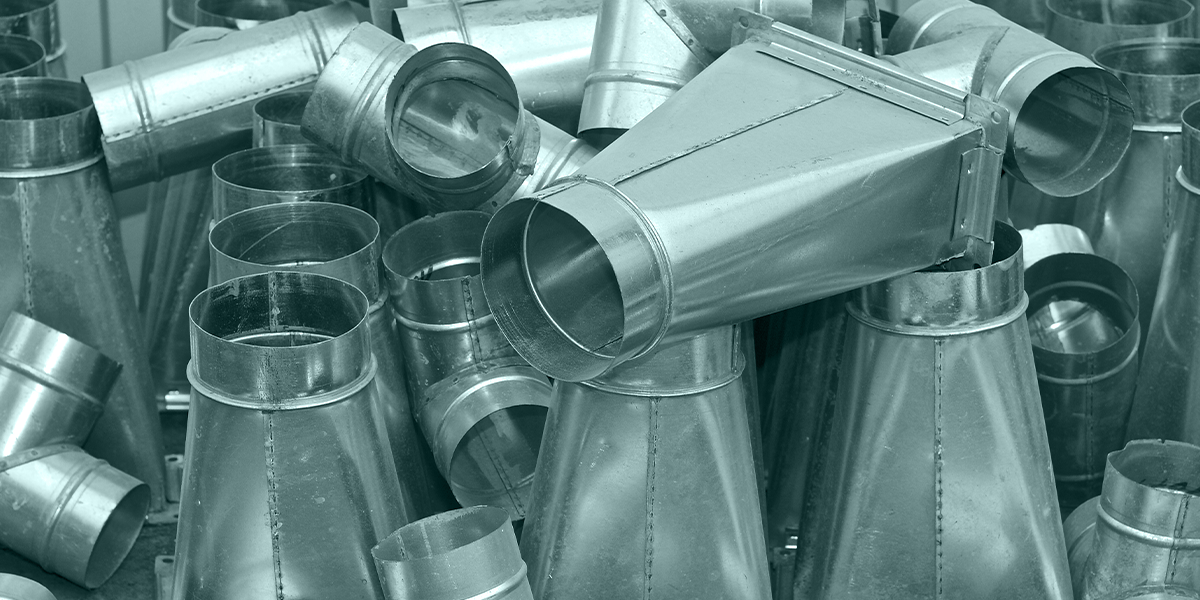
Duct fittings and connectors are the components that make a duct system functional. This guide explains what they do, covers the most common types contractors encounter and provides a framework for choosing the right option based on system requirements and jobsite conditions.
What Do Ductwork Fittings and Connectors Do?
Duct fittings and connectors serve three primary roles in an HVAC system. They change the direction of airflow when ductwork needs to navigate around structural obstacles, such as beams, columns or existing mechanical equipment.
They change the size or shape of the duct to match different zones, equipment connections or spatial constraints. They branch off or merge airflow to distribute conditioned air to multiple areas within a building. The right fittings and connectors maintain smooth airflow, create reliable seals and keep the system operating as designed.
Common HVAC Duct Fittings and Connectors
There are several specialized HVAC duct fittings and connectors. Let’s look at each type in more detail.
Elbows
Elbows redirect airflow around obstacles. There are two types:
- A 90-degree elbow makes a sharp turn and saves space in tight installations.
- A 45-degree elbow uses a gentler angle that reduces turbulence and maintains better airflow efficiency with lower pressure drop.
Elbows can have different radii:
- Short-radius elbows turn quickly but create more turbulence.
- Long-radius elbows take up more space but allow air to flow more smoothly through the turn.
For jobs where energy efficiency and system performance are priorities, long-radius elbows and 45-degree angles reduce resistance. For jobs where space is limited, 90-degree short-radius elbows fit into smaller areas.
Tees, Wyes and Taps
These fittings split or combine duct runs to serve multiple zones. A tee creates a sharp 90-degree branch off the main duct run. A wye uses an angled branch that allows air to transition more smoothly, reducing pressure loss and improving distribution efficiency.
Saddle taps cut directly into an existing duct and attach a branch without removing sections. You can use them for retrofit work or when adding vents to an operating system. Taps save labor time but require proper sealing to prevent leakage at the connection point.
Reducers and Transitions
Reducers connect ducts of different diameters. Transitions connect ducts of different shapes, such as round to rectangular. Both types manage the change gradually to minimize turbulence and pressure loss.
Concentric reducers maintain the same centerline on both ends. Eccentric reducers shift the centerline, which helps maintain clearance in tight spaces or avoid conflicts with structural elements. Choosing between the two depends on how the ductwork runs through the building and on the available clearances.
Couplings, Flanges and Drive Connectors
Couplings connect straight sections of spiral duct. Many spiral systems use gasketed couplings that create airtight seals and install quickly. Flange systems use a bolted connection that provides a secure, reusable joint. Flanges work well for systems that may need future access or modification.
The traditional slip-and-drive method for rectangular ducts slides one section into another and secures the connection with drive cleats. It requires proper sealing with mastic to prevent air leakage at the joint.
End Caps and Register Boots
End caps seal the end of a duct run. You can use them during testing or to terminate unused branches. Register boots connect the ductwork to registers or grilles. The boot transitions the duct to the outlet’s size and shape, providing a finished connection point for air delivery.
How to Choose Duct Fittings and Duct Connectors
Selecting the right fitting requires evaluating four key factors. These considerations help you match components to job requirements and avoid rework.
1. Spiral vs. Rectangular Systems
The choice of duct system dictates the types of fittings available. Spiral systems often use gasketed fittings that provide better seals and faster installation. Round fittings for spiral duct systems handle higher pressures and resist leakage better than unsealed connections.
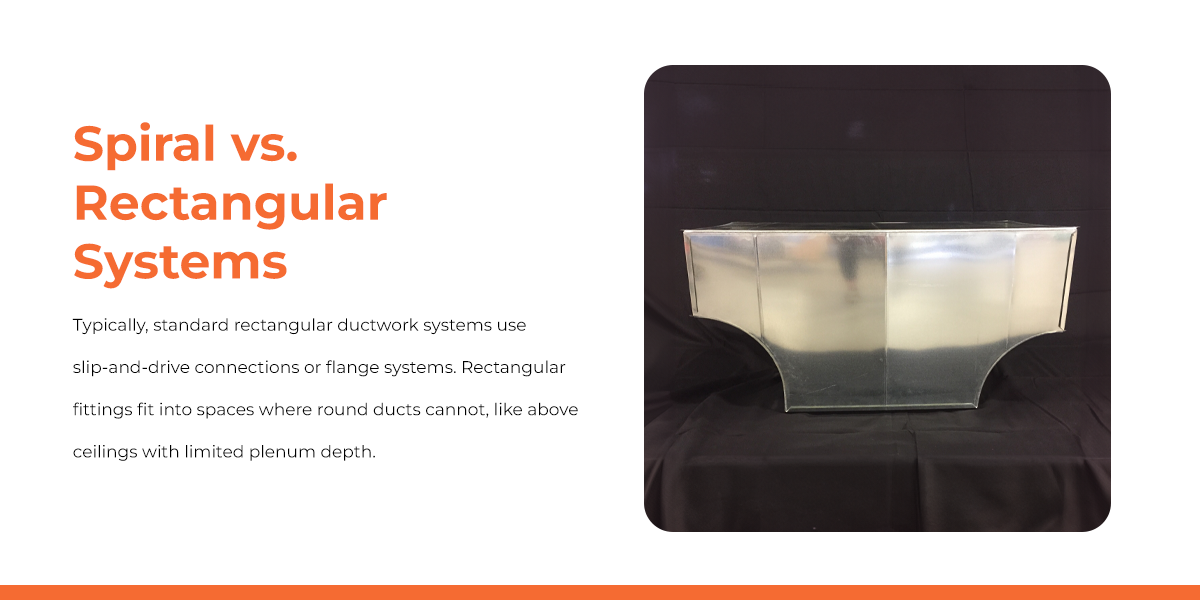
Typically, standard rectangular ductwork systems use slip-and-drive connections or flange systems. Rectangular fittings fit into spaces where round ducts cannot, like above ceilings with limited plenum depth.
2. Site Constraints and Obstructions
Jobsite conditions determine what fittings will actually fit. Tight mechanical rooms, existing pipes, structural beams and ceiling height all limit fitting options. An ideal long-radius elbow might not fit in the available space, so you will have to use a shorter radius or multiple 45-degree elbows.
Custom-fabricated fittings solve problems that standard components cannot. Unusual angles, offset transitions or non-standard sizes require custom duct fabrication to match the specific on-site conditions. Having access to a fabricator who can produce custom solutions keeps projects moving when standard inventory falls short.
3. Sealing Needs
Poorly chosen fittings create turbulence and pressure drops that force the fan to work harder and waste energy. Duct leakage can account for significant energy loss in buildings, and poorly sealed connections can reduce system efficiency while increasing operating costs.
Gasketed fittings and properly sealed connections prevent air leakage. You should prioritize airtight duct connections in high-pressure systems and applications where energy efficiency matters. Sealed joints reduce callbacks, pass commissioning tests and ensure the system delivers the expected performance.
4. Installation Speed and Complexity
Different connection types require different amounts of labor time. For example, snap-lock systems and gasketed fittings install much faster than traditional methods. Reducing on-site labor time lowers installation costs and keeps projects on schedule.
Installation time for large commercial duct systems can range from 2 to 4 weeks. Extending that timeline due to fit delays or rework cuts into profitability. Having the right parts on hand or reliable pickup and delivery helps you avoid costly extensions.
Tips for Better Fitment and Fewer Callbacks
These tips address common failure points for contractors and improve overall installation quality.
Prioritize Proper Sealing to Prevent Leaks
Seal every joint before covering the ductwork. Duct mastic provides a durable, long-lasting seal that handles temperature changes and system movement better than tape. Apply mastic to all seams, joints and connections, working it into gaps to create a continuous seal.
Foil-backed tape works for accessible joints that may need future service access, but avoid relying on it for permanent concealed installations. Tape can fail over time if not applied to clean, properly prepared surfaces with sufficient pressure. For high-pressure systems and enclosed areas, mastic remains the most reliable option.
Test connections before closing walls or ceilings. A visual inspection catches obvious gaps, but pressure testing confirms the system holds under operating conditions. Addressing leaks during installation prevents callbacks and ensures the system passes commissioning.
Reference Industry Standards to Guarantee Compliance
The International Mechanical Code (IMC) provides specific requirements for duct construction, materials and installation methods. The Sheet Metal and Air Conditioning Contractors’ National Association (SMACNA)’s HVAC Duct Construction Standards detail proper fabrication techniques, joint types, sealing methods and reinforcement requirements for different pressure classes.
Following these standards protects contractors from liability and ensures the system meets inspection requirements. It is best to reference the IMC and SMACNA documents during takeoff to prevent costly corrections.
Get the Right Fittings and Connectors From Hennemuth Metal Fabricators
Choosing the right fittings and connectors impacts system efficiency and project profitability. For most applications, standard spiral or rectangular fittings get the job done, but complex fitment challenges call for custom fabrication — especially when navigating tight mechanical rooms or unusual duct runs. Having a reliable fabricator who understands the trade makes all the difference.
Hennemuth Metal Fabricators carries a wide selection of duct fittings and connectors for both spiral and rectangular systems, with the in-house fabrication capabilities to handle custom solutions. When off-the-shelf components won’t solve the problem, we can provide custom fittings on the timeline your job demands.
Explore our full product line to see what’s in stock and request a quote for your next project.