
Ductwork plays a major role in how efficiently an HVAC system moves air through a home, commercial building or industrial facility. Two common options are fabric ductwork and metal ductwork, and each has different advantages depending on the space, budget, installation requirements and long-term performance goals.
Fabric ductwork can be lightweight, flexible and cost-effective for certain applications. Metal ductwork, including rectangular ductwork and spiral ductwork, is typically chosen for its durability, fire resistance, cleanability, custom fabrication options and long service life.
This guide compares fabric vs. metal ductwork by cost, durability, installation, maintenance, airflow and best-use applications so you can determine which option is right for your project.
Request a Custom Metal Ductwork Quote
Is Fabric or Metal Ductwork Better?
Metal ductwork is usually the better long-term option when durability, fire resistance, cleanability, high-pressure performance, custom sizing or long service life are priorities. Fabric ductwork may be a good fit for some budget-conscious, temporary or lightweight air distribution needs, but it is generally less durable and may require more frequent replacement.
For commercial HVAC projects, custom metal ductwork is often preferred because it can be fabricated to match project drawings, airflow requirements and installation conditions.
What Is Fabric Ductwork?
Fabric ductwork, also called textile ductwork or air socks, is made from lightweight fabric material that distributes air through vents, slots or perforations. It is often used in spaces where lightweight installation, visual design flexibility or lower upfront cost are priorities.
What Is Metal Ductwork?
Metal ductwork is typically made from galvanized steel, aluminum or stainless steel. It can be fabricated in rectangular, round, spiral or custom shapes depending on the project. Metal ductwork is commonly used in residential, commercial and industrial HVAC systems because it is durable, cleanable, fire-resistant and suitable for long-term performance.
Pros and Cons of Fabric Ductwork
Fabric ductwork is made of porous, lightweight fabric that diffuses air through small perforations. It offers several advantages over metal duct:
- Cost-effectiveness: Fabric ductwork’s cost is typically less than metal ductwork in terms of material and installation expenses. This fact makes it an attractive option for budget-conscious projects.
- Customizability: You can customize fabric ductwork to fit any space or design with options for different colors, shapes and sizes. Greater flexibility allows for more design freedom and aesthetic appeal.
- Ease of installation: Fabric ductwork is lightweight and easy to install, requiring fewer tools and labor than metal ductwork. As a result, you can enjoy reduced installation time and costs.
- Energy efficiency: Fabric ductwork can help improve energy efficiency by distributing air more evenly and reducing pressure drops. This can lead to lower energy bills and a more comfortable indoor environment.
It has a few potential disadvantages:
- Less durability: Fabric is less durable than metal and can be more prone to damage from moisture, UV exposure, and wear and tear. This can result in more frequent maintenance and replacement costs.
- Less fire resistance: Fabric ductwork may be less fire-resistant than metal ductwork, potentially spreading flames more quickly in the event of a fire. This can be a safety concern in certain applications.
- More susceptible to pests: Fabric ducts can be more susceptible to insect and rodent intrusion compared to metal ductwork. With improper sealing and maintenance, there’s a risk your ducts will become compromised by these creatures.
Fabric ductwork can be a practical option for some spaces, especially where lower upfront cost, lightweight installation or temporary air distribution are priorities. However, it may not be the best fit for projects that require long-term durability, fire resistance, frequent cleaning, custom fittings or high-performance commercial HVAC ductwork.
Pros and Cons of Metal Ductwork
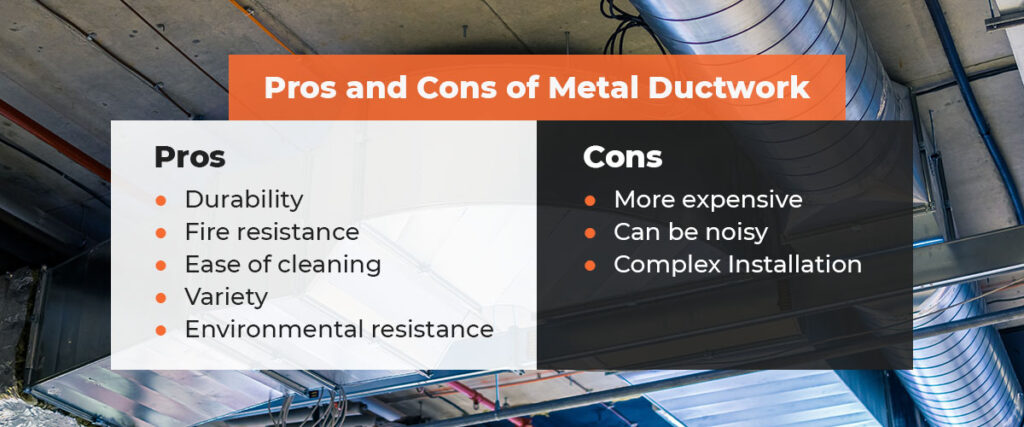
Metal ductwork is made of various types of metal, such as galvanized steel, aluminum or stainless steel. The ducts are typically rectangular or circular. Here are the advantages of using metal ductwork in HVAC systems:
- Durability: Metal ductwork is known for its durability and can last for decades without needing replacement.
- Fire resistance: Metal is fire-resistant, helping to slow or prevent the spread of fire in an emergency.
- Ease of cleaning: Sheet metal requires minimal care and is easy to clean.
- Variety: Metal ductwork comes in more options than just round, unlike fabric ductwork. Spiral metal ductwork helps reduce friction, making your ducts more energy-efficient.
- Environmental resistance: Metal ductwork is resistant to more than just fire. Metal ducts are suitable for a wide range of environmental conditions, including extreme temperatures, exposure to moisture and corrosive environments.
Metal ductwork has a few disadvantages to consider, such as:
- Cost: Metal ductwork is generally more expensive than fabric options.
- Noise: This type of ductwork can be noisy, especially without proper installation or insulation.
- Installation: Installing metal ductwork can be more complex due to its weight and the need for accessories like hanger brackets and air valves, which can drive up installation costs.
Metal ductwork is a durable, fire-resistant option that’s suitable for a range of applications. While it’s more expensive to install, you’ll save on replacement costs compared to fabric. If you’re looking for strong, lasting ductwork that can handle high-pressure systems, metal ductwork might be the right option for your facility.
It’s often the preferred choice for commercial HVAC contractors because it can be fabricated to match specific drawings, building layouts and airflow requirements. Custom metal ductwork also allows contractors to order rectangular duct, spiral duct, fittings, transitions and connectors that fit the project more accurately and reduce field adjustments during installation.
When to Choose Metal Ductwork
Custom metal ductwork is often the better choice when standard duct products do not match the project’s layout, airflow needs or installation requirements. Contractors may choose custom-fabricated metal ductwork when they need:
- Rectangular ductwork built to project dimensions
- Spiral ductwork for exposed ceilings or efficient airflow
- Custom fittings, reducers, elbows or transitions
- Ductwork that matches project drawings or takeoffs
- Durable ductwork for commercial or industrial environments
- Cleaner installation with fewer field adjustments
- Long-term performance and lower replacement frequency
If you have drawings, a takeoff or a materials list, we can fabricate custom ductwork to match your project specifications.
Comparing the Costs and Features of Fabric Ductwork vs. Metal Ductwork
Now that you know the pros and cons of each type of ductwork, let’s compare the costs and features to help you choose between the two. Remember to weigh your needs and long-term goals against the features of these two materials to ensure you get the right type.
Costs
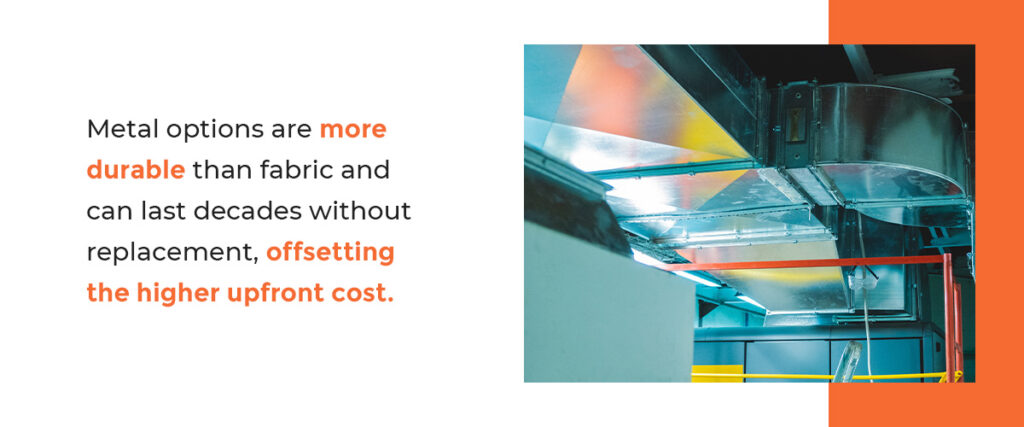
Fabric ductwork is generally less expensive than metal. It requires less material and labor to install, making it a cost-effective option for many building owners and contractors. On the other hand, metal ductwork is more expensive due to the cost of materials and the labor needed for installation. Overall, metal options are more durable than fabric and can last decades without replacement, offsetting the higher upfront cost.
Request a Custom Ductwork Quote
Features
Fabric ducting systems are lightweight and easy to install, making them a popular material choice for retrofit projects and temporary installations. Fabric is also flexible and can be designed to fit a building or space’s specific needs. This type of ductwork typically consists of polyester or other synthetic materials and can be designed for aesthetic value, with various colors and patterns available.
Metal ductwork is more durable and longer-lasting than fabric. It can improve indoor air quality because metal is less likely to foster mold growth. At the same time, metal duct can be noisy and requires regular maintenance to prevent condensation. Its ability to withstand more severe environmental conditions than fabric makes it ideal for demanding operations.
Overall, fabric ductwork is a cost-effective and flexible option particularly suitable for large commercial and manufacturing facilities thanks to its high efficiency. While metal ductwork is more expensive upfront, you’ll save in the long run with its durability and fire-resistance. Fabric ductwork must be replaced more frequently than metal ductwork since the material wears out. Fabric can be a good option for your operation, but metal offers better environmental resistance, enhanced durability and reduced maintenance.
With quality metal ductwork, you’ll reduce long-term costs and enjoy clean air for years to come.
Request Custom Metal Ductwork From Hennemuth
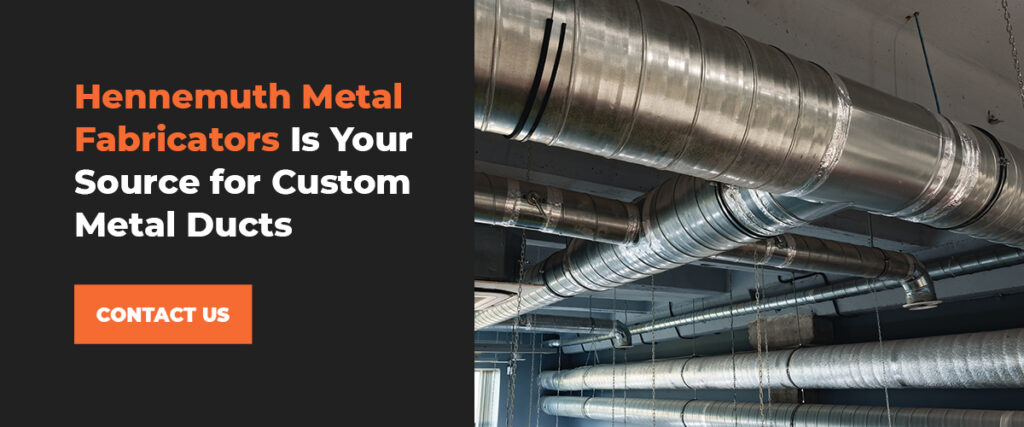
If metal ductwork is the right fit for your project, Hennemuth Metal Fabricators can help. We fabricate custom rectangular ductwork, spiral ductwork, fittings and HVAC components for contractors, commercial facilities and residential applications throughout the Pittsburgh region and surrounding service area.
Our team can work from drawings, takeoffs or project specifications to produce ductwork that fits your installation needs and supports long-term HVAC performance. Contact us today to request a quote for custom metal ductwork.