
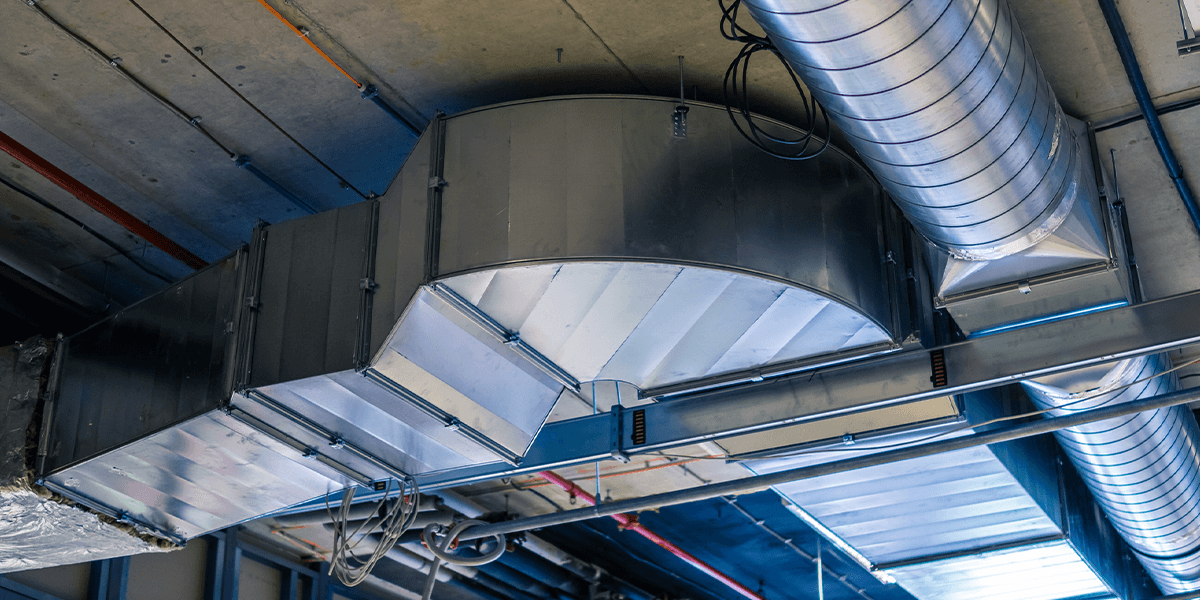
Commercial ductwork plays a critical role in how efficiently an HVAC system moves conditioned air through a building. For contractors, builders and facility teams, the right ductwork affects airflow, installation efficiency, energy performance, noise control and long-term system reliability.
This guide explains the fundamentals of commercial ductwork, including common duct types, material options, design considerations, installation factors and cost drivers. It also covers when custom-fabricated ductwork can help reduce field adjustments, simplify installation and keep projects moving on schedule.
If you already have drawings, a takeoff or a materials list, Hennemuth Metal Fabricators can fabricate commercial ductwork to match your project specifications.
Request a Commercial Ductwork Quote
What Is Commercial Ductwork?
Commercial ductwork is the system of ducts, fittings and connections that moves heated, cooled or ventilated air throughout a commercial building. It is designed around airflow requirements, building layout, HVAC equipment, code considerations, material needs and installation conditions.
For many projects, commercial ductwork is custom fabricated from drawings or takeoffs so contractors can install properly sized duct sections, fittings, transitions and connections with fewer field adjustments.
Table of Contents
- The Role of Ductwork in Commercial HVAC Systems
- Benefits of Well-Designed Commercial Ductwork
- Types of Commercial Ductwork
- Commercial Ductwork Materials
- How to Choose the Right Commercial Ductwork
- Commercial Ductwork Installation Considerations
- Request Commercial Ductwork from Hennemuth
The Role of Ductwork in Commercial Applications
Commercial ductwork is a network of ducts that acts as the circulatory system for air in your building. Commercial ducted air conditioning distributes conditioned air in large commercial spaces. The HVAC system provides warm or cool air, the ducting is the channel that transports the air to its desired locations.
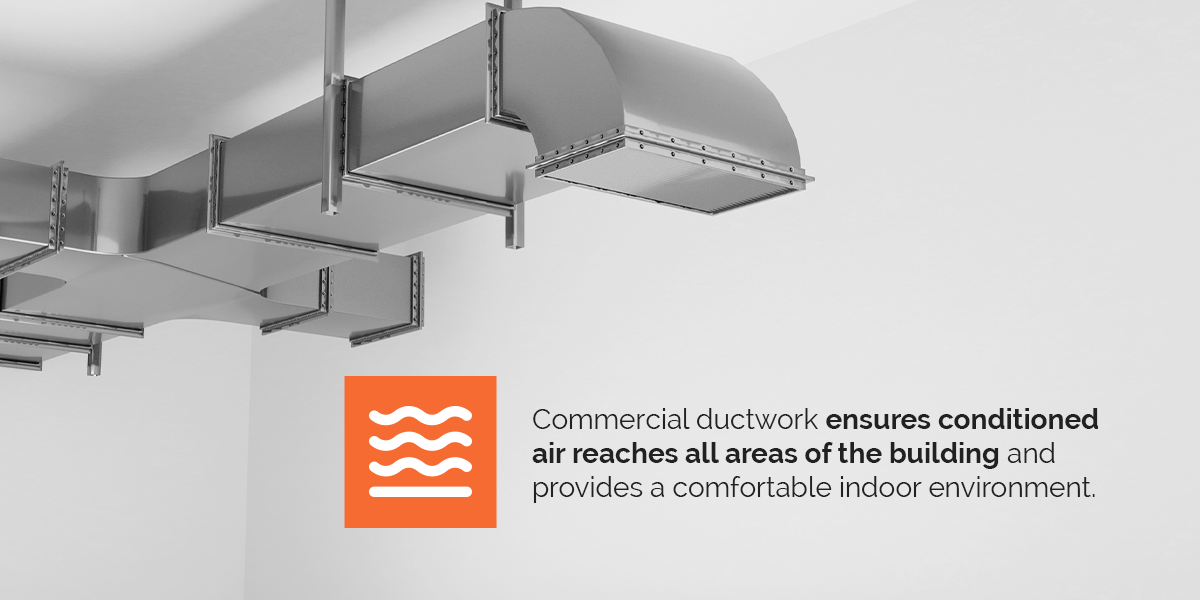
The primary purpose of commercial HVAC ductwork is to deliver air to and from the HVAC system, which can be used for heating, cooling or ventilation. Employees and customers in a commercial environment must be comfortable in their space. Commercial ductwork ensures conditioned air reaches all areas of the building and provides a comfortable indoor environment for everyone in the space.
The Benefits of Well-Designed Commercial Ductwork
Well-designed and fabricated ductwork offers a host of benefits in a commercial setting, including:
- Improved air quality: Well-maintained commercial air vents and ducts prevent the buildup of dust, allergens and pollutants, improving air quality for occupants.
- Reduced noise: Poor ductwork often produces rattling sounds, which can be counterproductive in a commercial setting. In contrast, professional fabricators can reduce these noises and maintain a quiet, comfortable environment.
- Energy efficiency: Well-designed ventilation ducts and pipes prevent air leaks and make airflow more efficient, which lowers energy bills in any commercial property.
- Enhanced HVAC performance: An HVAC system’s performance relies heavily on ductwork. The design and layouts of commercial HVAC ductwork must be carefully planned to ensure optimal, balanced air distribution.
- Long-term cost savings: Investing in high-quality ductwork pays off long-term. It reduces the need for repairs, decreases energy costs and extends the life span of HVAC equipment.
Types of Commercial Ductwork
The right commercial HVAC ductwork for your space depends on its size, layout and the type of HVAC system. Consider the following duct types:
Rectangular Ductwork
Rectangular ducts fit in limited spaces, such as above ceilings and along walls. However, commercial ducts often have more extensive measurements. The moving air comes into contact with a larger surface area, which can cause more resistance and greater noise.
Rectangular ductwork is commonly used in commercial buildings where ceiling space, wall space or layout constraints require ducts to fit within tighter areas. It can be custom fabricated to match project drawings, making it a strong option for contractors working from detailed plans or takeoffs.
Round Ductwork
Round ducts allow air to flow smoothly, as their shape reduces friction and turbulence. They’re often more efficient for quietly moving large volumes of air and can lower energy costs. They’re best for open areas where efficiency is essential.
Spiral Ductwork
Spiral ductwork is a type of round ductwork wound in a spiral. It’s often used to transport large volumes of air in commercial ventilation systems. It handles heating and cooling better than other materials, saving energy costs. The seals are on the outside of the system, which means better, quieter airflow, ideal for corporate environments. This ductwork offers functionality and style, ideal for energy savings and aesthetics.
Spiral ductwork is often used in commercial spaces where efficient airflow, durability and a clean finished appearance are important. It is especially useful in open ceilings, large spaces and projects where round duct is preferred for performance or aesthetics.
Custom Ductwork
If you have an unusual space or want customized ductwork, you can collaborate with specialist metal fabricators. They’ll customize and pre-assemble the ducts to save you installation time.
Custom commercial ductwork is often the best fit when standard duct sizes do not match the project layout, field conditions or specifications. Custom-fabricated duct sections, fittings and transitions can reduce installation delays and help contractors complete work more efficiently.
Choosing the Right Ductwork Materials
You can also select a ductwork material to suit your needs. There are two primary materials for use in commercial spaces:
Flexible Air Ducts
Flexible air ducts are lightweight, cost-effective and easy to install. Their accordion-like structure fits well in areas with limited space but can lead to airflow issues without proper maintenance. These ducts comprise a wire coil surrounded by a flexible metal sheath. They’re easy to handle and maneuver in complex configurations. While flexible ducts offer many benefits, they’re limited in high temperatures and lack the durability of metal alternatives.
Sheet Metal Ducts
Sheet metal ductwork is popular in commercial applications because of its durability and ease of cleaning. While the initial investment for installation is higher than that for flexible ducts, they last longer. This material is also considered the most energy-efficient due to its enhanced airflow.
What Type of Commercial Ductwork Is Right for Your Space?
When selecting the right ducting for your commercial needs, consider the following:
Airflow Requirements
The volume of air you need to circulate is one of the most significant considerations when choosing the correct duct size and material. Your airflow requirements depend on occupancy, equipment and the space’s purpose. It’s best to work with professionals who will design the ductwork to meet these needs.
Operating Environment
Consider the environment in which the ducting system will operate. Temperature, humidity and potential exposure to chemicals can impact your choice of material. Choose ductwork that can withstand the environment in your commercial space.
Noise Levels
Noise reduction is a priority in many commercial buildings. If your ventilation systems need to operate quietly, choose materials with noise-reducing properties, like insulated flexible ductwork or custom sheet metal designs.
Sizing and Layout
When sizing your system, consider three main factors:
- Square footage: Calculating a building’s floor size involves multiplying the length and width of every room in the building.
- Cubic feet per minute (CFM): Take the HVAC unit’s size in tons, multiply it by 400 and divide that by the building’s total square footage to find the CFM.
- Friction loss rate: Measuring friction loss rate can be challenging for non-professionals. Coil number, duct length, grilles, dampers, registers, filters and turns affect the friction loss rate. Without an accurate measurement, your ductwork’s airflow may be affected.
The ducting system’s layout should minimize obstructions, bends and sharp turns. The smoother and straighter the ducts, the better the airflow. Properly designed and balanced layouts make the system more efficient and optimize ventilation.
Commercial Ductwork Cost Factors
Commercial ductwork costs vary based on the size of the building, duct layout, material requirements, system complexity and installation conditions. While some commercial HVAC projects may fall within broad per-square-foot ranges, actual pricing depends heavily on the project scope and specifications.
Common cost factors include:
- Total ductwork volume and number of duct sections
- Material type and gauge
- Rectangular, round or spiral duct requirements
- Number of fittings, elbows, reducers and transitions
- Complexity of the layout
- Whether custom fabrication is required
- Delivery, staging and project timeline
- Labor requirements for installation
For contractors, accurate drawings or takeoffs can help speed up the quoting process and reduce uncertainty around pricing.
Have a materials list or takeoff? Send it to Hennemuth for a commercial ductwork quote
Commercial Ductwork Installation Considerations
Commercial ductwork installation depends on the building layout, ceiling space, HVAC equipment, airflow requirements and project schedule. Contractors often need duct sections, fittings and transitions that match project drawings closely so installation crews can work efficiently in the field.
Before installation, project teams should confirm:
- Duct sizes and airflow requirements
- Material and gauge requirements
- Rectangular, round or spiral duct needs
- Fitting, transition and connector requirements
- Access limitations or tight installation areas
- Delivery, staging and project timeline needs
Custom fabrication can help reduce cutting, fitting and rework on-site because duct sections are produced to match the approved layout or takeoff.
Request Commercial Ductwork from Hennemuth
Hennemuth Metal Fabricators helps HVAC contractors, builders and commercial project teams get the ductwork they need for efficient installation. Our team fabricates commercial ductwork, rectangular duct, spiral duct, fittings and related HVAC components to match project requirements.
If you have drawings, a takeoff or a materials list, contact Hennemuth to request pricing and estimated turnaround.